

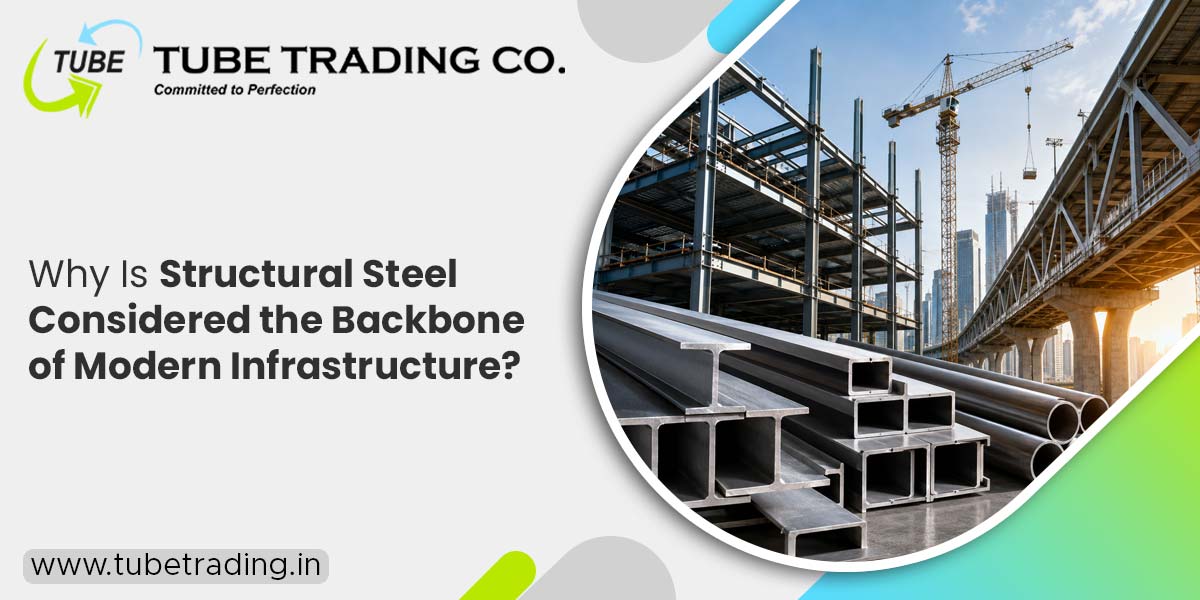
A new bridge, factory, railway station, or warehouse often begins with one shared concern: strength. We need buildings that can carry weight, face harsh weather, and stay safe for years. As a Structural Steel Supplier in India, we’ve seen how the right steel gives each project a firm start. At Tube Trading Co., we understand that steel is more than a building material. It supports our work, our safety, and the spaces we use every day.
We Depend on Strength More Than We Realise:
Most of us walk into a large building without thinking about its hidden frame. We see walls, glass, doors, lights, and wide open floors. Behind all this, structural steel carries much of the load. It helps our buildings remain stable when faced with strong winds, heavy rain, or daily use.
At Tube Trading Co., we often speak with project teams worried about strength and long-term safety. As a Structural Steel Dealer in Gujarat, we help our clients choose steel sections suited to each load and design. That choice matters because a weak frame can affect every part built around it.
Steel gives us confidence when a project involves long spans or heavy equipment. We can create wide spaces without adding too many columns. This is useful for factories, airport halls, shopping centres, and storage units. More usable space also gives us greater freedom when planning the inside area.
Why Do We Call Structural Steel the Backbone?
Think about our own body for a moment. Our bones give us shape, support movement, and protect vital parts. Structural steel serves a similar role inside major buildings and public works. We may not see the full frame after construction, yet we depend on it every day.
As a Structural Steel Exporter in India, we know that buyers expect steady quality across every shipment. Steel sections must match the required size, grade, and strength. Even a small mismatch can cause delays at the worksite or create issues during fitting.
We call steel the backbone because it supports many parts of our built spaces, including:
- We use steel beams to carry floor and roof loads.
- We install steel columns to move weight safely into foundations.
- We add channels and angles for frames, supports, and braces.
- We use steel plates at joints and high-load connection points.
- We fit hollow sections where clean shapes and strong support are needed.
These parts work together as one firm frame. When we select and fit each part with care, the whole structure feels steady. Our walls, floors, roofs, pipes, and machines can then sit on a sound base.
We Can Build Faster Without Giving Up Strength:
Construction delays can drain time, money, and patience. Many people tell us how one late material delivery can hold up several teams. Structural steel helps reduce this pressure because we can prepare much of the frame before it reaches the site.
At Tube Trading Co., our work as a Structural Steel Supplier in India includes helping buyers plan sizes and quantities early. Once the material reaches the site, trained crews can join sections using bolts or welds. This can make site work faster and easier to control.
Faster work does not mean careless work. Steel parts can be checked before dispatch and again during fitting. We can confirm the grade, thickness, length, and surface state. These checks give our engineers and site teams fewer surprises later.
Steel Gives Us More Freedom in Design:
At first, strength may seem like the only reason for choosing structural steel. Yet design freedom matters just as much. Steel can support curved roofs, tall towers, long bridges, open halls, and bold shapes. We can create more without placing heavy walls everywhere.
As a Structural Steel Dealer in Gujarat, we regularly notice how varied project needs can be. One client may need beams for a factory shed. Another may need channels, angles, or plates for a power plant. This range allows us to support many plans without forcing one fixed design.
We can also extend or change many steel-framed buildings later. A growing factory may need another floor, a wider bay, or more equipment support. With the right study and design, steel can make such changes more practical.
We Need Steel for More Than Buildings:
When we hear “structural steel”, our first thought may be a tall building. Yet steel supports much more of our daily life. We rely on it while travelling, producing goods, storing food, moving power, and running public services.
Tube Trading Co. works as a Structural Steel Exporter in India for needs linked with many types of work. Common uses include:
- Bridges, flyovers, railway stations, and metro works
- Factories, workshops, warehouses, and storage sheds
- Power plants, refineries, and heavy process units
- Schools, hospitals, offices, and shopping centres
- Ports, airports, stadiums, and public halls
- Solar support frames and power line structures
Each use brings a different load, setting, and safety need. We must look at more than size alone. Grade, shape, surface care, joint design, and service life all affect the final choice.
Structural Steel Can Support Better Use of Resources:
Waste on a worksite can feel frustrating, especially when budgets are tight. Steel sections are made in set sizes and can be cut as per approved drawings. Good planning helps us use material with less waste and fewer unwanted pieces.
As a Structural Steel Supplier in India, we’ve seen how clear drawings and correct quantity plans reduce confusion. Steel also has value after a building reaches the end of its useful life. We can recover and recycle much of the frame instead of sending everything to waste.
At Tube Trading Co., we believe responsible use begins before the first order. We should select the right grade, avoid needless weight, and protect the material during storage. Better care can reduce damage, repeat work, and extra use of raw material.
Quality Is Felt Long After Construction Ends:
A finished structure may look perfect on opening day. The real test begins after years of heat, rain, vibration, loads, and constant use. Good structural steel helps our buildings face these demands with greater strength.
As a Structural Steel Dealer in Gujarat, we understand why buyers ask about test records and material grades. Proper papers help us trace the steel source and confirm key details. This gives project teams more trust before cutting, welding, or fitting begins.
Steel still needs correct care. Water, salt, chemicals, and poor storage can lead to rust. We can lower this risk through paint, galvanising, suitable coating, and planned checks. Good drainage also prevents water from sitting around steel joints.
Choosing the Right Steel Needs More Than a Price Check:
Price matters in every project, but the lowest rate can hide future costs. Wrong sizes may need fresh cutting or replacement. Poor surface care may increase repair work. Late supply can leave workers and machines waiting.
As a Structural Steel Exporter in India, we know that each order must match both technical and delivery needs. We should review the grade, section type, quantity, length, packing, and dispatch plan. Clear talks at the start can prevent stress near the project deadline.
Before placing an order, we suggest checking:
- Does the steel grade match our approved design?
- Are the sizes and thicknesses clearly listed?
- Can we receive test records where required?
- Is the material packed for safe handling and travel?
- Can the supply plan match our site schedule?
- Is there support if our quantity or size needs change?
At Tube Trading Co., we treat these questions as part of good service. We don’t want our clients to discover a problem after unloading. We want every order to feel clear, checked, and ready for use.
A Strong Structure Begins with a Trusted Supply Partner:
We’ve seen this happen often. A project can have skilled engineers and good drawings, yet poor material planning creates avoidable stress. The right supply partner helps us keep quality, quantity, and timing under control.
Our role as a Structural Steel Supplier in India goes beyond sending steel from one place to another. We help our clients understand available sections, suitable grades, and planned supply. This support can save valuable time during buying and site work.
Tube Trading Co. brings practical knowledge to each order as a Structural Steel Dealer in Gujarat. We understand local project needs, urgent schedules, and the value of clear communication. Our clients should always know what material is coming and when it will arrive.
For buyers beyond India, our work as a Structural Steel Exporter in India follows the same care. We focus on correct details, safe packing, and clear shipping plans. Distance should never reduce trust or create doubt around an order.
Building with Confidence:
Structural steel earns its place at the heart of modern infrastructure through strength and flexibility. It lets us build taller, wider, and faster while keeping safety at the centre. It also supports future changes, better material use, and long service life.
At Tube Trading Co., we know every beam or column may support someone’s workplace, home, or daily travel. That thought keeps our work grounded. When we choose the right steel and plan each supply with care, we create more than a frame. We create trust that can stand for years.