

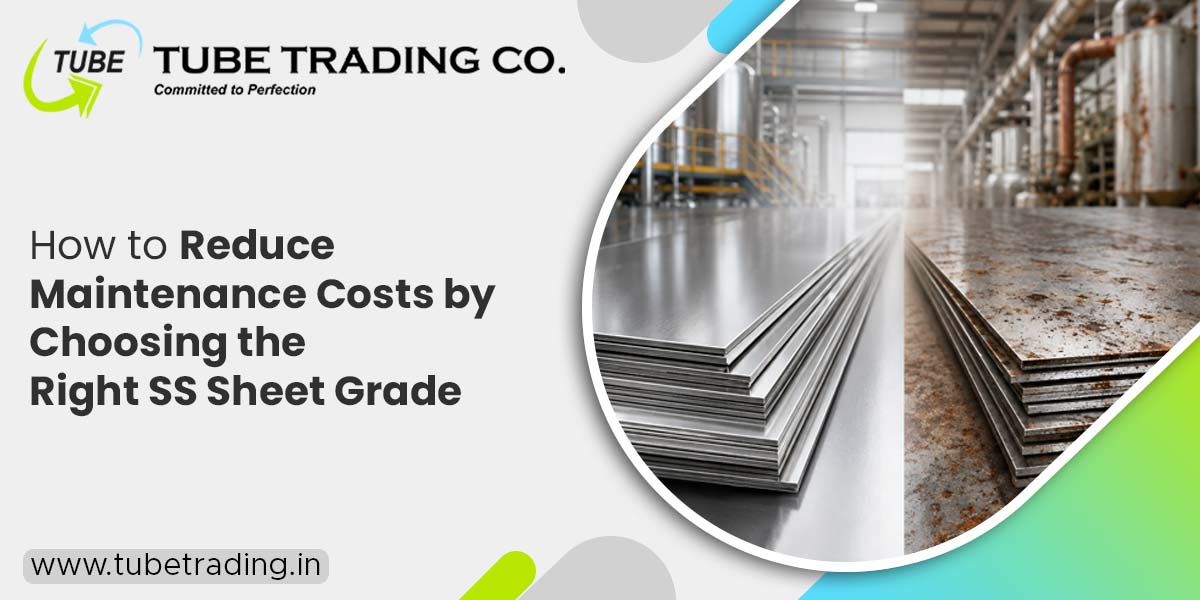
Maybe you’re replacing a stained panel much sooner than expected. Perhaps rust marks keep returning after each clean-up. As an SS SHEETS (304/316) Supplier in Gujarat, Tube Trading Co. has seen how one early choice can affect years of repair work. The lowest sheet price can feel sensible today, yet become costly after repeated cleaning, repairs, and lost work hours.
Many people tell us stainless steel should never rust. We understand why this feels true. The word “stainless” sounds like a promise of complete protection. In real use, each grade handles heat, moisture, salt, and chemicals in a different way. Choosing the right grade means matching the sheet with the actual working conditions.
Maintenance Costs Often Begin Before Installation:
At first, a small stain does not seem important. Your team wipes it away and continues working. Soon, the mark returns, a weld begins to weaken, or the surface loses its finish. When clients approach Tube Trading Co. as an SS SHEETS (304/316) Exporter in India, we encourage a closer look at the working area before discussing price.
Maintenance costs include much more than replacing a damaged sheet. We must count cleaning products, labour hours, spare parts, stopped production, and urgent transport. A sheet that costs slightly more may save far more during its working life.
We have seen this happen often in kitchens, plants, storage units, and coastal sites. A grade may look perfect during fitting but struggle after months of exposure. As an SS SHEETS (304/316) Distributor in Gujarat, we help you consider the full cost instead of the first invoice alone.
Grade 304 Works Well in Many Everyday Settings:
Grade 304 is a trusted choice for many indoor and mild outdoor uses. It gives good resistance to normal moisture and common cleaning agents. It is also easy to shape, weld, and maintain when the surroundings suit the grade.
At Tube Trading Co., we often suggest 304 for equipment covers, food counters, cabinets, sinks, and general plant work. Choosing an SS SHEETS (304/316) Supplier in Gujarat becomes easier when you can explain how the sheet will be used each day.
Grade 304 may suit your project when:
- We expect normal indoor humidity without heavy salt exposure.
- We use mild cleaning products without strong chlorides.
- We need a clean finish for food, storage, or display areas.
- We want good forming and welding for regular fabrication work.
- We can clean the surface often and prevent dirt from settling.
Grade 304 is not a poor option simply because 316 offers more protection. Paying for 316 in a mild setting may add cost without giving a useful return. A dependable SS SHEETS (304/316) Exporter in India should help us avoid both overbuying and underbuying.
Grade 316 Gives More Protection Against Salt and Chemicals:
Maybe your site sits near the coast. Perhaps the sheet faces salty water, chemical vapour, or harsh washdowns. These conditions can create tiny pits that grow below the surface. Most people do not connect those small marks with future repair bills.
Grade 316 contains molybdenum, which helps the surface resist many chloride-rich settings. Tube Trading Co. often recommends this grade for marine areas, chemical units, medical equipment, and food plants using strong cleaning agents. As an SS SHEETS (304/316) Distributor in Gujarat, we first ask what touches the sheet, how often, and at what temperature.
Grade 316 may be the safer choice when:
- We work near coastal air or salty water.
- We use cleaning agents that contain chlorides.
- We handle chemicals that can attack grade 304.
- We cannot clean or inspect the sheet very often.
- We need longer service life in wet working areas.
Grade 316 does not remove every risk. Poor drainage, rough welds, trapped dirt, and wrong cleaning products can still harm the surface. An experienced SS SHEETS (304/316) Supplier in Gujarat will never claim one grade can handle every setting without proper care.
Look Beyond the Grade Number:
The grade gets most of the attention, but thickness matters just as much. A thin sheet may bend, vibrate, or develop dents during regular work. Once water settles inside a dent, stains and local damage can appear much sooner.
Surface finish also changes cleaning needs. A smooth finish leaves fewer spaces for dirt and moisture. A rough or damaged finish may hold deposits near joints and corners. Tube Trading Co. helps us review thickness, finish, size, and end use when choosing an SS SHEETS (304/316) Exporter in India.
We should also discuss fabrication before placing an order. Cutting heat, dirty tools, and poor welding can damage the protective surface. Carbon steel dust may settle during grinding and later create rust marks. The chosen grade cannot correct careless workshop work.
Ask your fabricator these simple questions:
- Will separate tools be used for stainless steel work?
- How will weld marks and heat stains be cleaned?
- Can water drain without collecting near joints?
- Will sharp gaps or narrow crevices hold dirt?
- How will the finished surface be protected during transport?
A trusted SS SHEETS (304/316) Distributor in Gujarat can supply the right material, but good handling protects that choice. We should keep the sheet covered, dry, and away from carbon steel dust before fitting.
Understand the Real Working Conditions:
Many project briefs use words like “wet area” or “outdoor use”. Those details are too broad for a sound grade choice. We need to know the type of water, level of salt, cleaning method, heat, airflow, and contact time.
At Tube Trading Co., we ask how the site behaves on a normal working day. As an SS SHEETS (304/316) Supplier in Gujarat, we may need to know whether splashes dry quickly or remain overnight. That small detail can change the level of corrosion risk.
Temperature also deserves attention. Warm liquid can make a mild chemical more harmful. Heat can also speed up surface damage around welds and tight gaps. When buying from an SS SHEETS (304/316) Exporter in India, share both normal and peak temperatures for a safer choice.
We should also consider nearby materials. Certain cleaners, salts, and metal dust can affect stainless steel without direct process contact. Good airflow and drainage often reduce this risk. As an SS SHEETS (304/316) Distributor in Gujarat, Tube Trading Co. helps us think beyond the visible part of the application.
Small Care Habits Protect the Sheet:
Even the correct grade needs simple care. Regular washing removes salt, dirt, and chemical traces before damage begins. Clean water and a soft cloth may be enough for many indoor areas.
We should avoid steel wool and harsh tools that scratch the finish. Cleaning should follow the grain on brushed sheets. After washing, we should rinse away all cleaning fluid and dry areas where water tends to remain.
A planned inspection can prevent an urgent repair. Look near welds, bolts, corners, drains, and covered joints. These areas often hold moisture longer than open surfaces. Tube Trading Co. encourages regular checks because early marks are easier and cheaper to manage.
The Cheapest Sheet Can Become the Costliest Choice:
A lower price feels attractive when budgets are tight. We understand that pressure. Yet a failed sheet can stop work, delay orders, and demand urgent labour. Those costs can soon exceed the saving made during purchase.
The right grade is not always the most costly option. It is the grade that fits your real conditions without waste. Grade 304 may offer excellent value in a mild area. Grade 316 may protect your budget where salt, chemicals, or hard cleaning create greater risk.
Tube Trading Co. helps us compare these choices with care and plain advice. We review the use, setting, finish, thickness, and care needs before suggesting a suitable sheet. This makes the purchase easier to explain and the result easier to maintain.
A Better Choice Starts With Better Questions:
Before ordering, tell us what the sheet will touch and how often cleaning will happen. Share the site location, working heat, fabrication method, and expected life. Photos, drawings, or samples can also help us understand the need.
Choosing the right SS sheet grade is not only a buying choice. It is a maintenance decision that stays with your project for years. With honest details and careful planning, we can reduce repairs, protect the finish, and avoid early replacement.
Tube Trading Co. believes a good sheet should keep doing its job without creating constant worry. When we match the grade with the real working setting, maintenance becomes simpler, costs remain controlled, and your team can focus on the work that matters.