

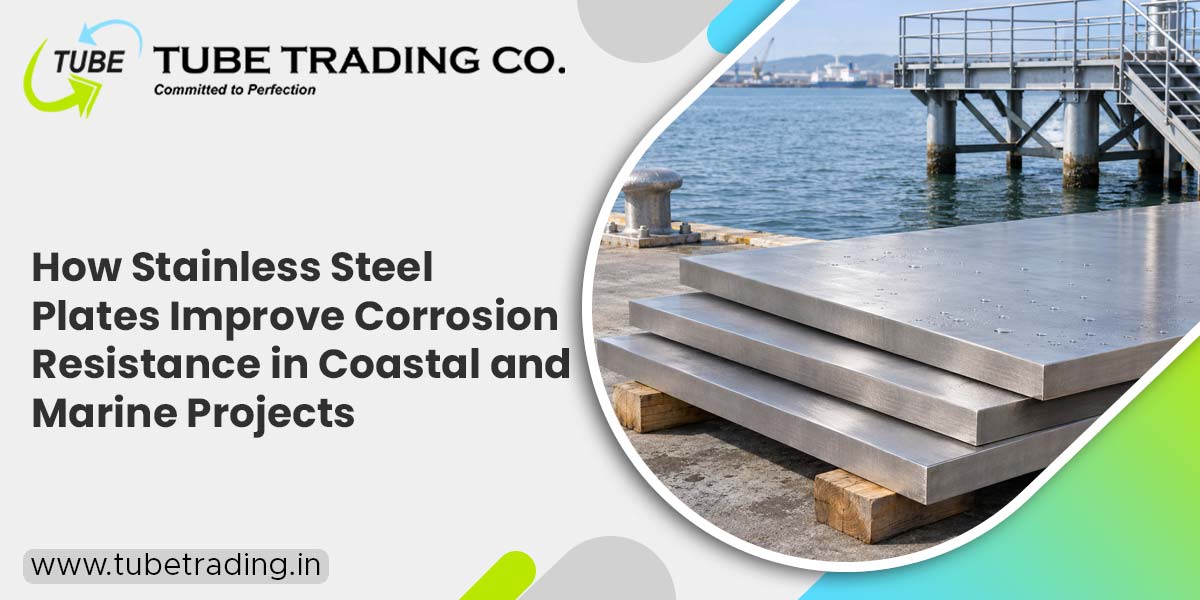
Finding rust on a recently finished coastal project can feel deeply frustrating. You have planned the work, managed costs and expected the material to last. Now, brown marks raise questions you thought were already settled. Tube Trading Co. understands why material choice matters long before installation begins. As a Stainless steel plates distributor in Vadodara, we encourage you to look beyond plate thickness and price. We start with a simpler question: what will the steel face every day?
Near the sea, that question changes almost everything. A plate beneath a sheltered walkway faces different conditions from one regularly soaked by seawater. We want you to understand those differences before placing an order, because correcting a poor choice later can disrupt far more than your budget.
Salt Leaves More Than a Surface Mark
A coastal structure can look dry while salt remains on the surface. Sea spray settles into corners, around fixings and along joints. When moisture returns, those deposits create conditions that encourage corrosion. We need to consider this repeated cycle, even where direct contact with seawater seems unlikely.
You might notice staining beneath a bracket while the open plate still looks clean. Rain can wash exposed surfaces, but sheltered areas often hold salt for longer. We should never assume that a covered section needs less attention. Sometimes, the hardest areas to clean become the first places where trouble starts.
Tube Trading Co. offers stainless steel plates for projects where exposure deserves careful thought. As a Stainless steel plates dealer in Gujarat, we encourage you to describe the actual installation area. Distance from the shore helps, but spray, drainage, heat and cleaning access also shape the choice.
What Gives Stainless Steel Its Resistance?
We cannot judge corrosion resistance by shine alone. Stainless steel contains chromium, which forms a very thin protective film on the surface. With suitable conditions and enough oxygen, this film can reform after minor damage. That protection helps explain why stainless steel performs differently from unprotected carbon steel.
However, we should not mistake corrosion resistance for complete immunity. Chlorides in salt can break down protection in small areas, causing pits. Narrow gaps can also develop crevice corrosion when trapped moisture creates harsh local conditions. A surface may look mostly sound while damage grows around one poorly drained joint.
Tube Trading Co. brings this distinction into the buying conversation. As an SS plates supplier in India, we encourage you to match the grade to the exposure. Buying stainless steel is only the starting point; choosing a suitable grade gives that purchase real value.
Choosing a Grade Without Guesswork
We understand the pressure to keep material costs under control. When two plates look similar, opting for the lower-priced grade can feel like a sensible saving. In coastal environments, however, small composition differences carry major consequences.
Where 304 and 316 Fit:
Grade 304 works well in many mild conditions, but salt exposure can limit its suitability. Pitting and surface staining often develop faster than expected near the coast. Adding molybdenum in Grade 316 improves resistance to chloride attack, making it a common choice for marine fittings and coastal structures.
The “L” in 316L means lower carbon content, which helps reduce certain corrosion risks after welding. Where extensive welding is planned, specifying 316L can be a sound choice. Even so, 316L cannot resist every marine condition, especially when water stays trapped against the steel.
When Exposure Demands More:
Tube Trading Co. encourages clear grade requirements before supply begins. As an SS plates distributor in Gujarat, we can discuss alternatives when exposure looks especially severe. Duplex stainless steels, for example, offer higher resistance in demanding environments, alongside greater strength.
We also need to keep strength and corrosion resistance as separate checks. A thicker plate may hold greater mechanical loads, but thickness alone will not prevent pitting. Material selection should begin with the environment, before mechanical calculations take over.
Good Plates Still Need Good Workshop Practice
It is disappointing when suitable material develops marks after fabrication. The grade was right, yet the surface begins showing rust within weeks. In many cases, the cause traces back to workshop handling.
Tube Trading Co. encourages you to discuss fabrication needs alongside the plate order. We believe sharing these details early helps you prepare appropriate handling procedures.
We suggest agreeing on a few practical workshop checks:
- Keep stainless steel away from carbon steel grinding dust and loose particles.
- Use suitable, dedicated tools and clean handling equipment.
- Remove weld heat tint through an appropriate, controlled treatment.
- Protect finished surfaces during storage, transport and installation.
We should also distinguish cleaning from proper weld treatment. Wiping away dirt does not remove heat tint. Treating that heat tint restores the protective surface condition, which is essential before the plate faces salt air.
Small Design Details Make Maintenance Easier
A plate rarely works alone. We connect it to supports, bolts, seals and nearby materials. Each connection can either help the plate perform or create a spot where corrosion finds a foothold.
Tube Trading Co. keeps the intended use central to material discussions. As a Stainless steel plates dealer in India, we suggest reviewing joint details with your design team. Open, well-drained profiles allow rainwater to wash the surface naturally, whereas closed channels can trap salt.
We also encourage you to consider surface texture. Rough finishes can retain salt deposits and make cleaning harder. Smooth surfaces help deposits rinse away more easily, which can improve long-term appearance.
Plan for Care Before Access Becomes Difficult
Stainless steel reduces many corrosion concerns, but we should still plan routine care. Coastal structures benefit from occasional washing with fresh water to remove accumulated salt. A simple rinse can prevent persistent surface deposits from developing into pitting.
Tube Trading Co. supports a clear purchasing brief. As an SS plates supplier in India, we suggest confirming access for inspection and cleaning before installation finishes. Detailing that allows easy washing can protect your material investment for years.
Buy for the Years Ahead
The lowest quote can feel reassuring until repairs interrupt a working site. We know how difficult it is to explain unexpected maintenance on a project meant to last. When you look at the total cost across years of service, selecting the right grade and finish becomes a clear decision.
Tube Trading Co. welcomes that practical conversation. As an SS plates distributor in Gujarat, we invite you to share your project’s environment before ordering. From marine fittings to architectural plates, we help you source material designed to withstand salt air, moisture and demanding coastal conditions.