

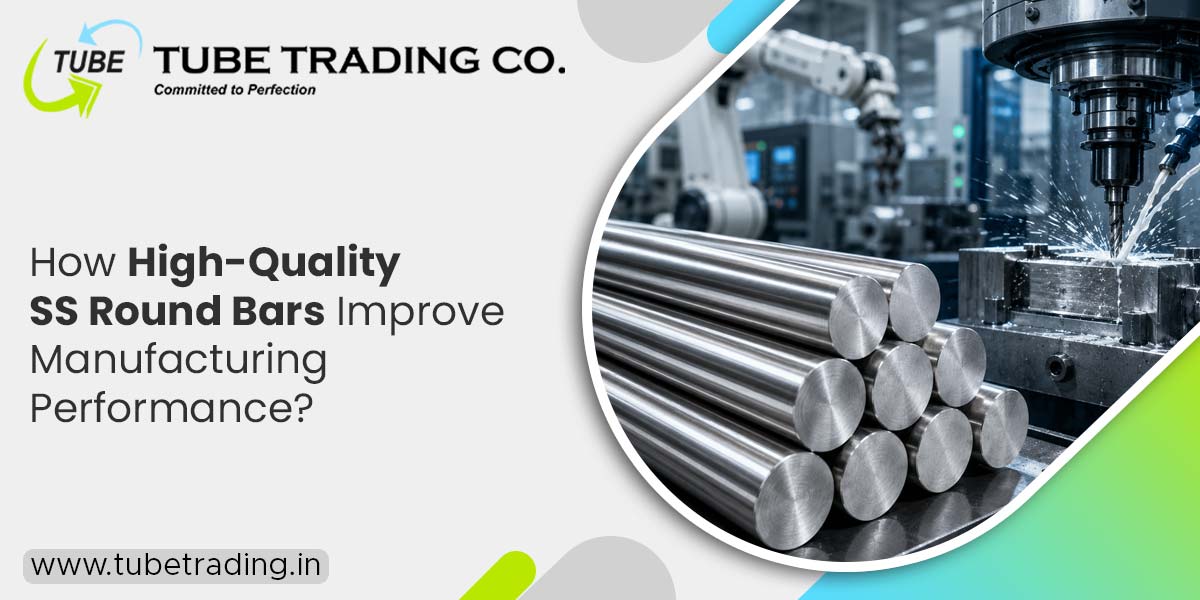
Have you ever wondered why some machines keep running smoothly for years while others seem to need constant repairs? Many people focus on the equipment itself, but the quality of the raw material often tells a different story. We've seen this happen often. Choosing the right SS ROUND BARS Distributor in India can make a bigger difference than most people expect. At Tube Trading Co., we have spent years helping manufacturers choose materials that support steady performance, fewer delays, and greater confidence in every project.
It Often Starts with One Small Decision:
Many people tell us that production problems appeared without warning. At first, everything looked normal. Then a part failed earlier than expected, machining became difficult, or the final finish did not meet the required standard. Most people don't connect these issues with the quality of the raw material.
That is why we always encourage businesses to look beyond price. At Tube Trading Co., we have seen how one thoughtful material choice can prevent many expensive problems later.
Why Material Quality Matters More Than Most People Think?
Every manufacturing process depends on consistency. Whether you are making machine parts, construction equipment, food processing units, or industrial tools, the material must perform the same way every time.
A high-quality stainless steel round bar offers:
- Better strength under pressure
- Reliable corrosion resistance
- Smooth machining performance
- Smooth machining performance
- Less material waste
- Better surface finish
These benefits may sound simple, but together they help factories work with fewer interruptions and greater confidence.
Better Raw Materials Mean Better Finished Products:
We've worked with many businesses that struggled to meet customer expectations. Sometimes the design was excellent, yet the final product still failed during inspection. The reason often came down to the material itself.
When businesses choose a trusted SS ROUND BARS Dealer in India, they reduce the risk of uneven quality. Every finished component becomes more dependable, and customers notice the difference.
At Tube Trading Co., we believe every successful product begins with reliable materials.
Fewer Production Delays Create Better Results:
Production delays rarely happen because of one major issue. More often, they grow from several small problems. A damaged cutting tool, poor machining, unexpected cracking, or rejected components can slowly affect the entire production schedule.
We've seen manufacturers spend days solving problems that could have been avoided with better raw materials.
Using premium stainless steel round bars helps reduce these interruptions. Machines perform more smoothly, workers spend less time correcting mistakes, and production stays on track.
Precision Makes Everyday Work Easier:
Many people think only large factories need precise materials. In reality, every workshop benefits from consistency.
When dimensions remain accurate and material quality stays uniform, machining becomes easier. Cutting, drilling, welding, and shaping require less effort, which saves both time and money.
Working with an experienced SS ROUND BARS Supplier in India gives manufacturers greater confidence before production even begins.
At Tube Trading Co., we understand that precision is not about perfection. It is about making daily work easier for every team involved.
Corrosion Resistance Protects Your Investment:
It usually starts with something small. A little rust appears. Then moisture affects performance. Eventually, the entire component may need replacing.
Many industries work in demanding conditions where heat, chemicals, humidity, or water exposure are part of daily operations. Stainless steel performs well because it naturally resists corrosion.
Choosing better materials means products continue performing long after installation. That reliability helps businesses protect both their reputation and their investment.
Strong Supply Creates Strong Manufacturing:
Good production planning depends on dependable supply. Even excellent engineering cannot prevent delays if materials arrive late or fail to meet quality expectations.
That is why manufacturers value a reliable SS ROUND BARS Exporter in India that understands delivery schedules, documentation, and consistent quality standards.
At Tube Trading Co., we know that supplying material is only part of the responsibility. Supporting our customers with dependable service matters just as much.
Quality Saves Money in Ways You May Not Notice:
Many people compare only the purchase price when buying raw materials. That feels like the obvious choice. Yet we've seen businesses spend far more fixing problems caused by lower-quality products.
Higher-quality stainless steel often reduces:
- Rework
- Scrap material
- Machine wear
- Tool replacement
- Maintenance costs
- Customer complaints
Over time, those savings become much larger than the initial difference in material cost.
Manufacturing Confidence Comes from Consistency:
Something is reassuring about knowing every batch will perform the same way. Production teams work with less stress. Quality inspectors find fewer issues. Delivery commitments become easier to meet.
Choosing a dependable SS ROUND BARS Distributor in India helps build that consistency across every stage of manufacturing.
At Tube Trading Co., we have seen how confidence grows when businesses stop worrying about material quality and focus on building great products.
Different Industries, One Common Need:
Although every industry has different requirements, they all depend on reliable materials.
High-quality stainless steel round bars are widely used in:
- Oil and gas equipment
- Food processing machinery
- Chemical plants
- Automotive components
- Construction projects
- Pharmaceutical equipment
- Engineering workshops
- Power generation
Each application demands strength, accuracy, and durability. Those qualities begin with the right material selection.
Choosing the Right Partner Matters:
Buying stainless steel should never feel uncertain. Many people tell us they simply want honest guidance, dependable quality, and timely deliveries.
Working with an experienced SS ROUND BARS Dealer in India gives manufacturers peace of mind before production even starts.
At Tube Trading Co., we believe strong relationships are built through trust, clear communication, and consistent quality rather than short-term promises.
Looking Beyond Today's Project:
Every manufacturing decision affects tomorrow's reputation. Customers remember products that last. Businesses remember suppliers who consistently deliver what they promise.
Selecting a trusted SS ROUND BARS Supplier in India is not only about completing today's order. It supports future growth, stronger customer relationships, and more dependable production.
We've learned that businesses rarely regret investing in better quality. More often, they wish they had done it sooner.
Supporting Businesses Across India and Beyond:
Manufacturing continues to grow, and expectations continue to rise. Customers expect better performance, longer product life, and reliable quality with every order.
Working with an experienced SS ROUND BARS Exporter in India helps businesses meet these expectations while maintaining confidence in every shipment.
At Tube Trading Co., we remain committed to supplying materials that support manufacturers across different industries, whether they serve local markets or customers around the world.
Final Thoughts:
You might have experienced this too: when you spend weeks planning a project, only to face problems that could have been avoided with better materials. It can be frustrating because so much hard work depends on one important decision.
That is why we continue encouraging manufacturers to choose a dependable SS ROUND BARS Distributor in India before looking at anything else. At Tube Trading Co., we believe quality is never an extra feature. It is the foundation that supports every successful product, every satisfied customer, and every manufacturing business that wants to keep improving year after year.
When manufacturers choose carefully, they are not only buying stainless steel. They are investing in smoother production, dependable performance, and confidence that lasts well beyond the final delivery.