

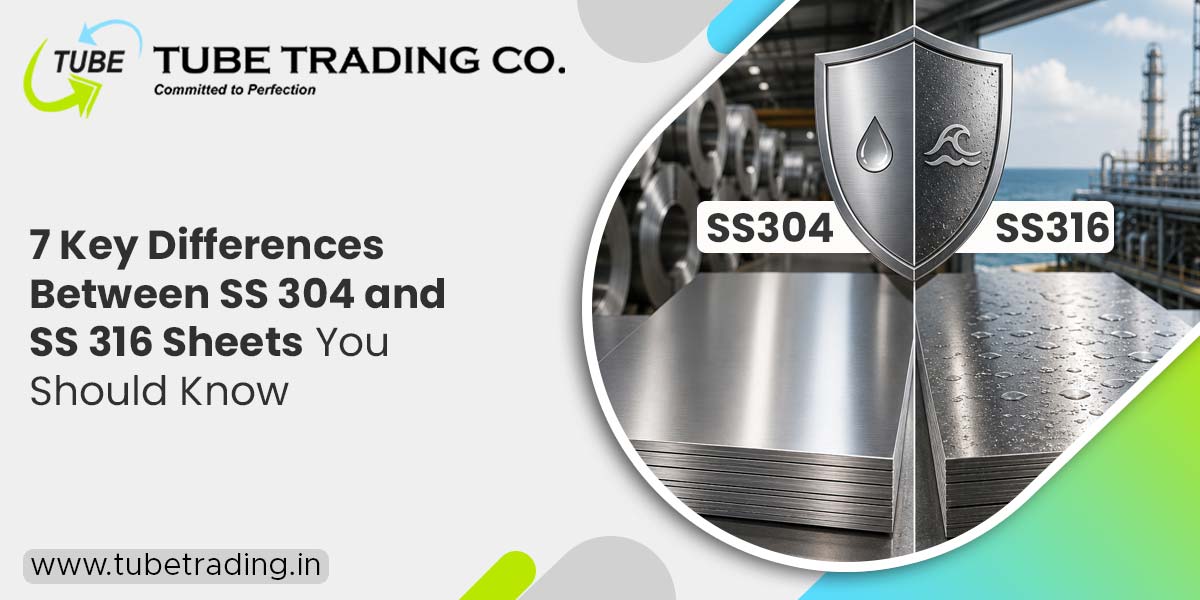
Have you ever stood in front of two products that looked almost the same and wondered which one would actually last longer? We've had many conversations with customers who felt exactly like that. Choosing the right stainless steel sheet isn't always easy, especially when both options seem alike at first glance. If you're searching for a trusted SS SHEETS (304/316) Distributor in India, you're probably looking for answers you can trust before making a decision.
At First, They Seem Almost Identical:
Many people tell us they only notice the difference after something goes wrong. Maybe the material started showing signs of rust earlier than expected. Maybe it didn't perform well in a coastal area or inside a chemical plant. At first, it doesn't seem important. Most people don't connect these things until replacement costs begin to rise.
We've seen this happen often. That's why we believe understanding the difference between SS 304 and SS 316 sheets before buying can save both money and stress later.
At Tube Trading Co., we spend time helping customers choose materials that truly fit their working conditions instead of simply selling what looks good on paper.
-
1. The Chemical Composition Is Different:
The biggest difference starts inside the metal itself. SS 316 contains molybdenum, while SS 304 does not. This small addition changes how the material behaves in demanding environments.
If your project involves moisture, chemicals, or salt exposure, this difference becomes much more important than most people expect. We've spoken with customers who assumed every stainless steel sheet offered the same protection. After comparing both grades closely, they quickly realised that wasn't the case.
Many businesses looking for an experienced SS SHEETS (304/316) Dealer in India often ask us about this exact point before placing an order.
-
2. Corrosion Resistance Changes Everything:
Maybe you've noticed rust appearing even on stainless steel. It surprises many people because the name itself suggests otherwise. The truth is that not every grade resists corrosion equally.
SS 316 performs better in places where saltwater, marine air, or strong chemicals are present. SS 304 still offers very good resistance for everyday industrial use, but harsher conditions demand stronger protection.
At Tube Trading Co., we always encourage customers to think about where the sheets will actually be used rather than choosing based only on price.
-
3. One Handles Chemicals Better Than the Other:
Some working environments are simply tougher than others. Food processing plants, pharmaceutical facilities, and chemical industries often expose equipment to substances that slowly damage ordinary materials.
This is where SS 316 usually becomes the preferred choice. The added molybdenum helps protect the surface against chemical attack over time.
When customers ask us for a dependable SS SHEETS (304/316) Supplier in India, this is one of the first questions we discuss because the working environment matters more than appearance.
-
4. Price Is Different, But So Is Long-Term Value:
Many people naturally compare prices first. That's completely understandable. Every project has a budget.
SS 304 generally costs less than SS 316. For many indoor applications and general engineering work, it performs extremely well without increasing project costs. On the other hand, spending more on SS 316 can prevent expensive repairs later if corrosion is likely.
We've learned that the cheapest option doesn't always become the most economical one over several years. At Tube Trading Co., we help customers look beyond today's invoice and think about tomorrow's maintenance costs.
-
5. The Right Choice Depends on Where You Use It:
It usually starts with one simple question. Where will the sheet be installed?
If the application involves indoor structures, furniture, kitchen equipment, or general fabrication, SS 304 often delivers excellent results. If the environment includes coastal air, marine applications, or heavy chemical exposure, SS 316 usually offers greater peace of mind.
People searching for a reliable SS SHEETS (304/316) Distributor in India often tell us they were unsure which grade suited their industry. A short discussion about the application usually makes the answer much clearer.
-
6. Both Grades Are Strong, But Their Strength Shows Differently:
Many people assume stronger always means better. In reality, the right strength depends on the job.
Both SS 304 and SS 316 provide excellent durability, good weldability, and reliable forming properties. They can both perform well in demanding industrial applications when selected correctly.
The difference appears when corrosion becomes part of the working environment. That's where SS 316 continues performing while reducing the risk of surface damage over time.
At Tube Trading Co., we often remind customers that strength alone doesn't guarantee a longer service life.
-
7. Maintenance Requirements Can Change Over Time:
Most people hope to install stainless steel once and forget about it. We understand that feeling because nobody enjoys repeated maintenance work.
SS 304 usually requires more attention when exposed to aggressive surroundings. SS 316 generally needs less maintenance in those same conditions because of its improved corrosion resistance.
If your goal is reducing maintenance over many years, this difference deserves careful thought before placing an order.
Businesses looking for a knowledgeable SS SHEETS (304/316) Dealer in India often ask us which option helps lower future maintenance costs rather than simply lowering the purchase price.
A Quick Comparison
| Feature | SS 304 | SS 316 |
|---|---|---|
| Corrosion Resistance | Very Good | Excellent |
| Molybdenum Content | No | Yes |
| Marine Use | Limited | Highly Suitable |
| Chemical Resistance | Good | Better |
| Cost | Lower | Higher |
| Common Applications | General Industry, Food | Marine, Chemical |
| Equipment, Furniture | Pharmaceutical Industries |
So, Which One Should You Choose?
There's rarely one perfect answer for everyone. Maybe your project needs dependable performance at a sensible cost. In that case, SS 304 could be exactly what you need.
If your sheets will face chemicals, coastal weather, or constant moisture, SS 316 may save you significant maintenance expenses later. We've seen both situations many times, and the right decision always depends on how the material will actually be used.
Many customers searching for a trusted SS SHEETS (304/316) Supplier in India come to us with uncertainty. They leave feeling confident because they've chosen the material that matches their application instead of following assumptions.
Why Customers Continue Choosing Tube Trading Co.?
Over the years, we've realised that most people don't simply want stainless steel sheets. They want confidence that they're making the right decision.
At Tube Trading Co., we believe every project deserves honest guidance, dependable quality, and practical advice. We don't rush customers into choosing the more expensive option. We help compare both grades, understand the working conditions, and recommend what truly fits the requirement.
Whether you're buying for a single project or managing regular industrial supply, Tube Trading Co. is here to support you with consistent quality and straightforward advice. As a dependable SS SHEETS (304/316) Distributor in India, we believe every successful project begins with choosing the right material.
If you're also looking for a reliable SS SHEETS (304/316) Dealer in India, we're always ready to help you make a confident decision.